Dela.
From a stranger's offer to a deal both sides trust. Designing safe transactions for an Australian marketplace.
The problem
Online deals between strangers fall apart through scams, ghosting and unclear next steps. Neither side trusts the other.
The solution
A confidence-first flow. Sellers send a request, buyers confirm it, the platform holds payment, and delivery is tracked in the app.
The impact
Request → delivery
Every step of the deal tracked in one place, for buyer and seller.
I designed the complete UI/UX, from requirements to final screens, as part of the DelaExchange team at Digiratina Technologies.
Design for trust first. Payment holding, delivery tracking and request confirmation came before every secondary feature.
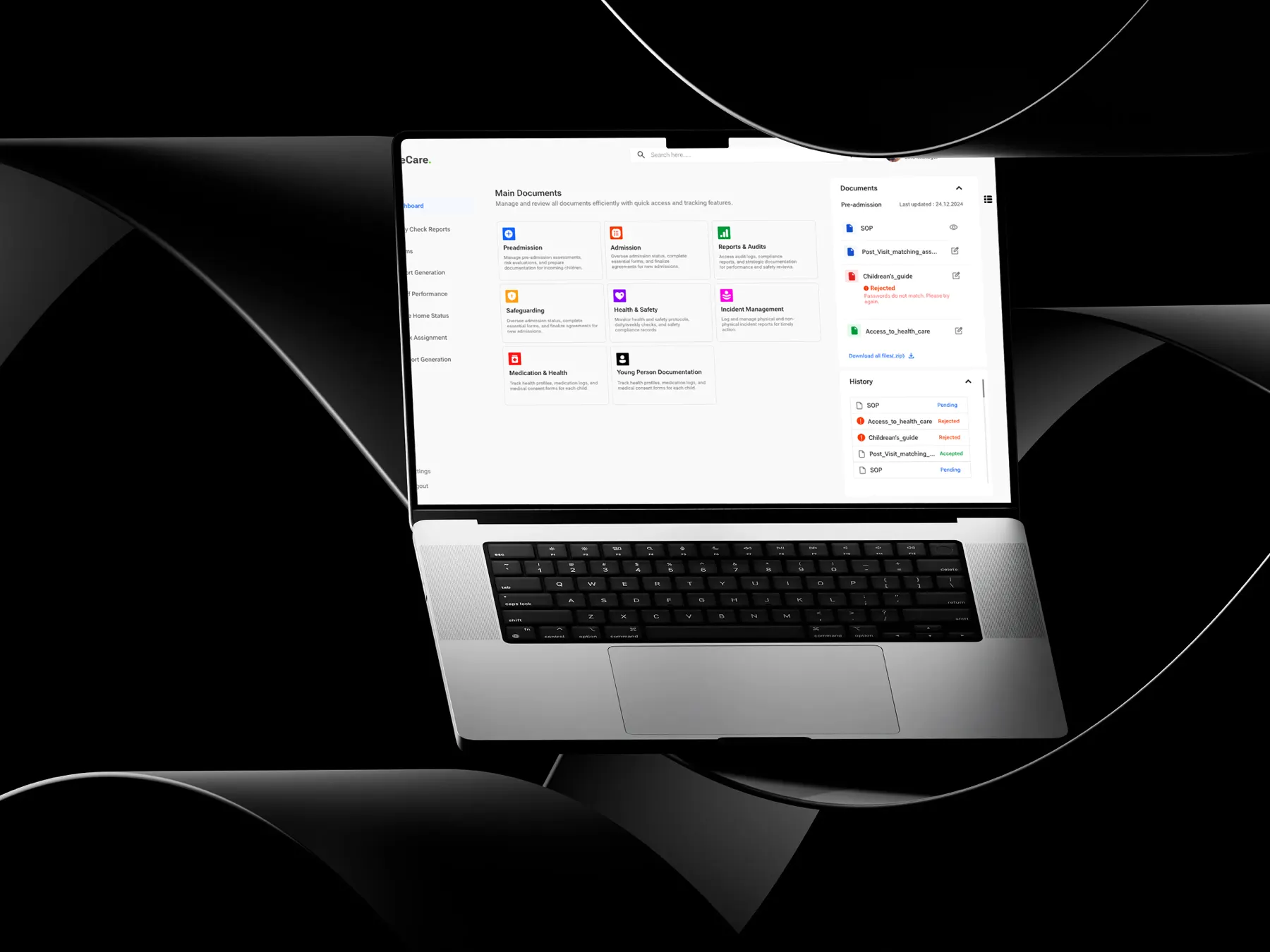
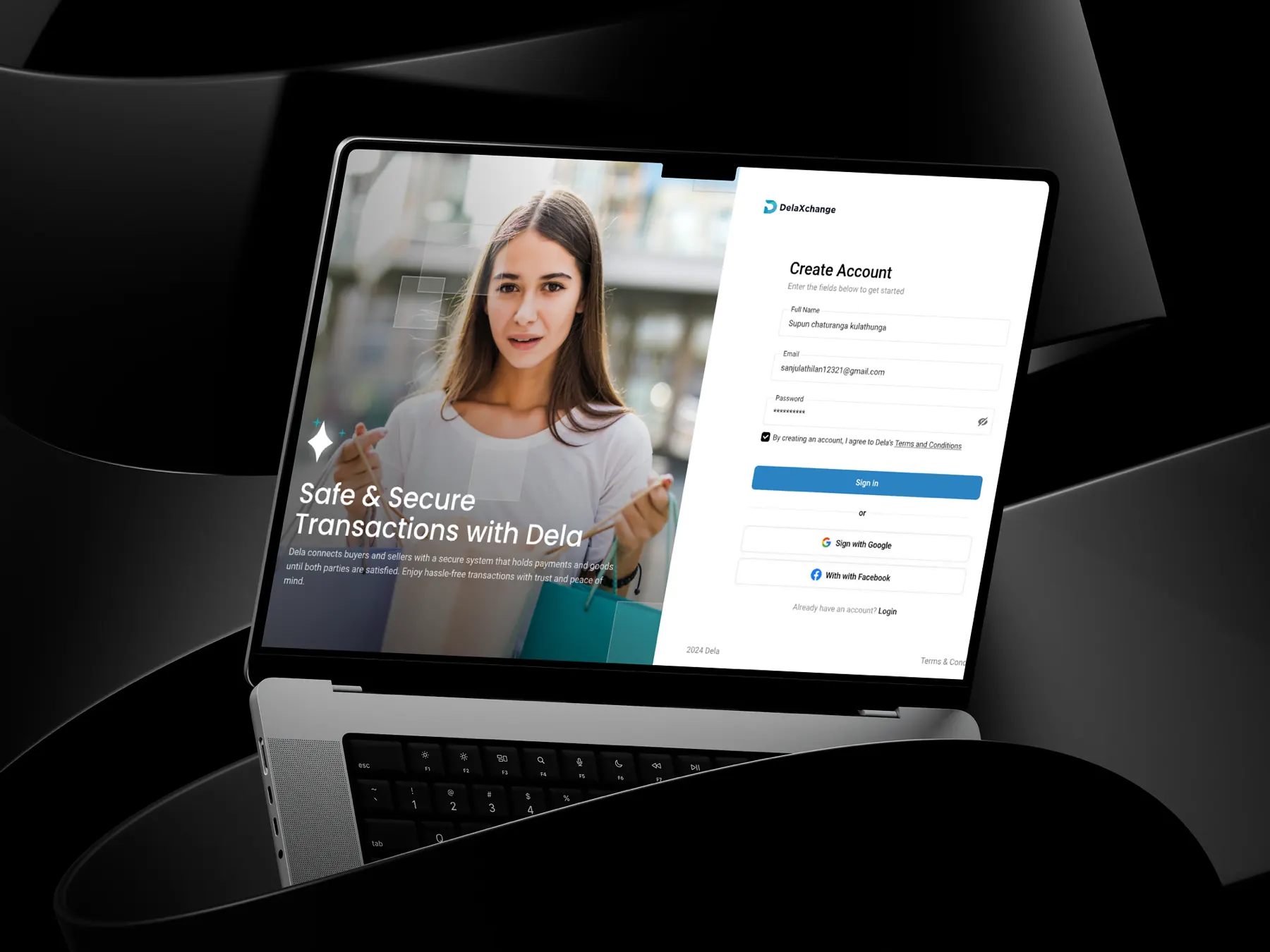
Buyer and seller journeys across a web dashboard and mobile: sign-in, deal requests, payment status and order tracking.
The decisions behind the experience
See the interface. Follow the decision.
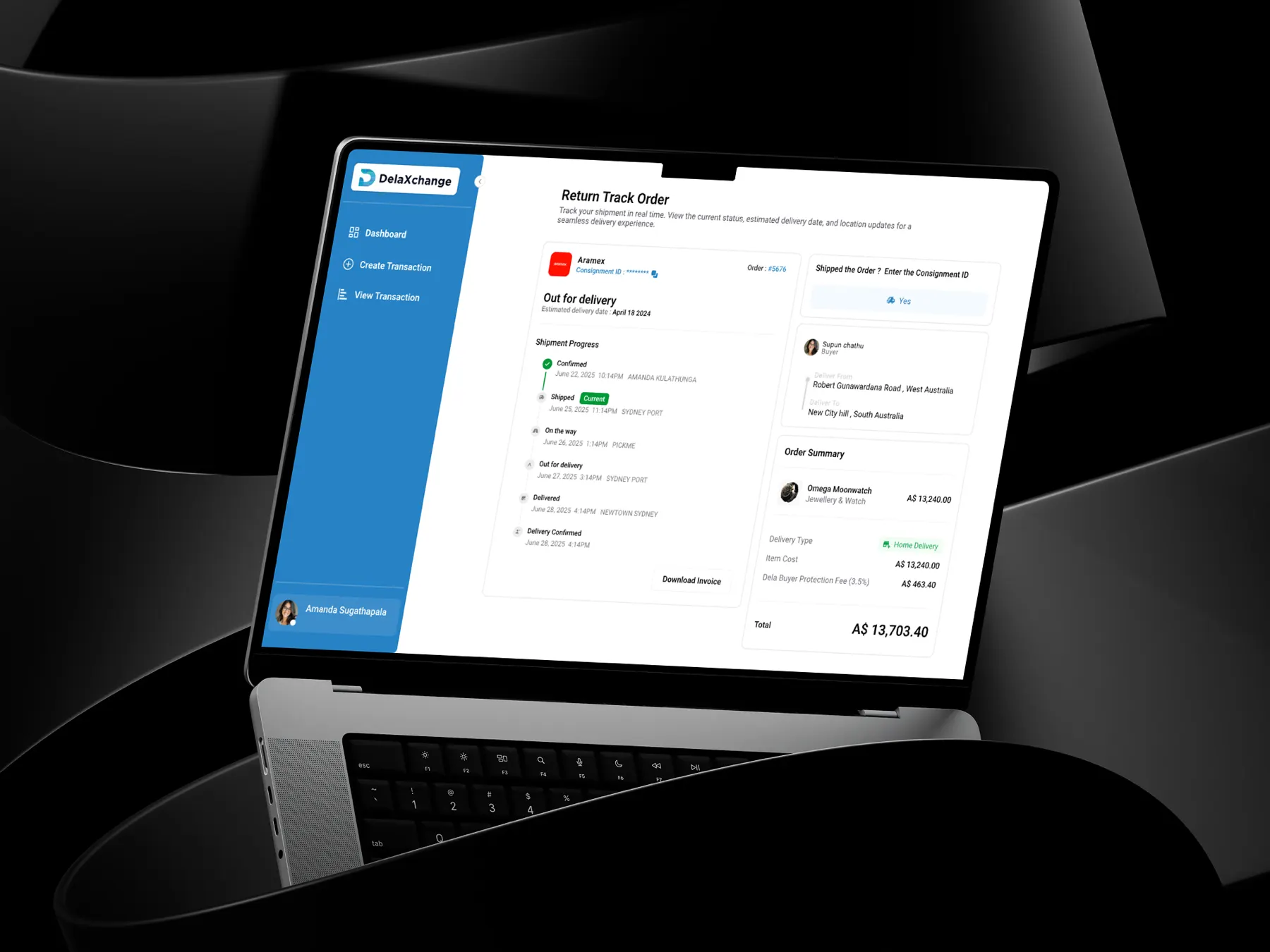
Make the deal state impossible to miss
Every transaction shows where it stands and who is waiting on whom.
Read the decision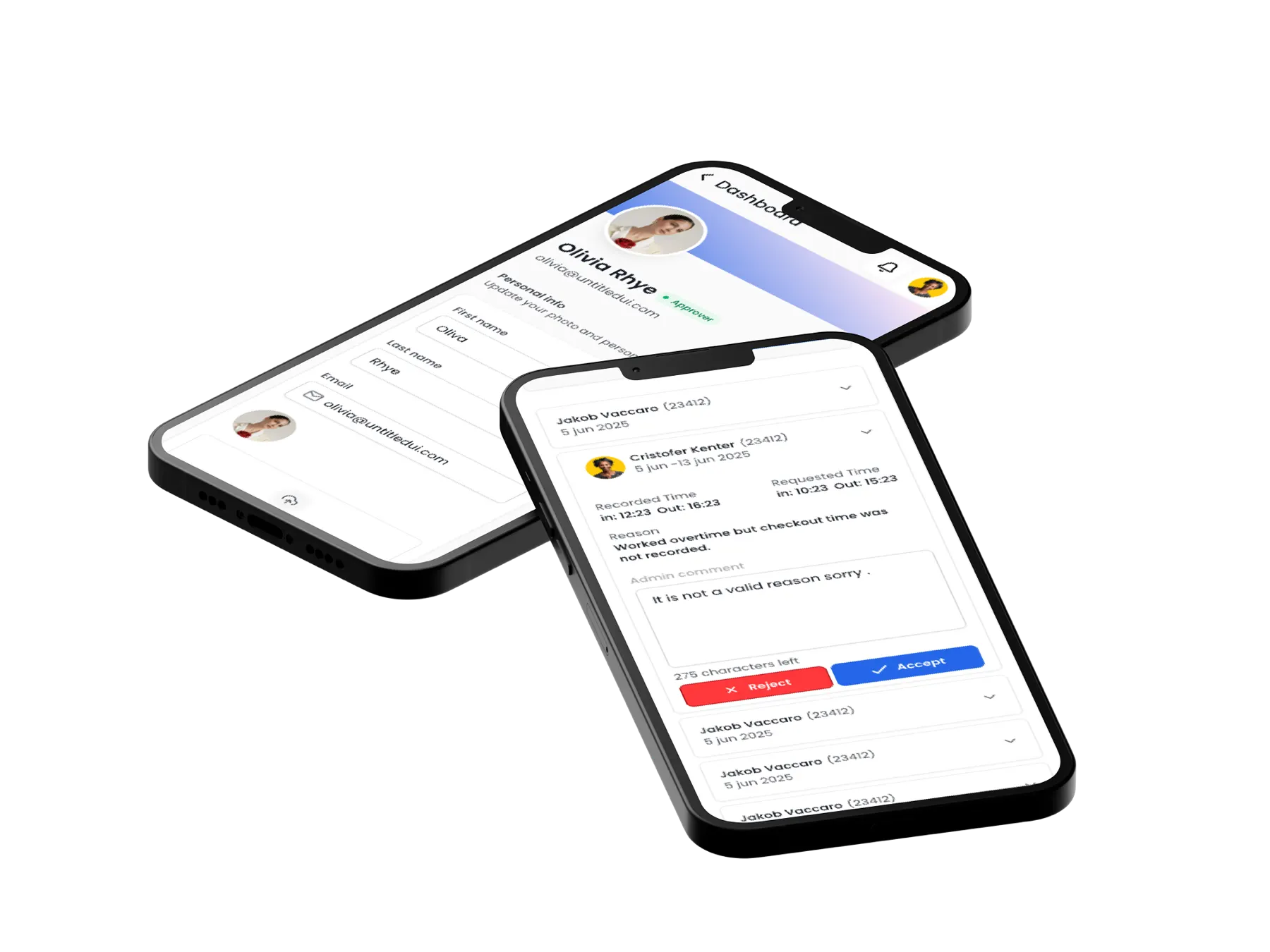
Give the buyer the final yes
Sellers start the request. Nothing moves until the buyer accepts.
Read the decisionResearch, exploration, and what I learned↓
Two strangers. One deal. No reason to trust each other.
Peer-to-peer marketplaces run on uncertainty. Sellers worry a buyer will vanish after agreeing. Buyers worry the item will never arrive, or won't match the listing.
Dela set out to make these deals safer and less stressful for Australian users. One product had to serve two people with opposite fears, inside the same transaction.
If either side felt unsure at any step, the deal would be abandoned, and the platform would lose both users.
- Building trust without face-to-face contact
- Preventing ghosting partway through a deal
- Making every step clear for buyer and seller
The obvious answer was another listings site. The useful answer was a protected deal.
I researched peer-to-peer marketplaces, escrow-style payment models and user complaints about scams and failed deals. The pattern was clear: people could already find things to buy. What broke was finishing the deal safely.
So the product shifted from browse-and-message to a structured transaction. The seller initiates, the buyer confirms, and the platform holds payment until delivery is tracked.
Trust takes a few extra steps
Confirmations add friction. I kept that friction only at the moments where it builds trust, and removed it everywhere else.
Make trust visible. Let the transaction carry the reassurance, not the copy.
What shaped the interface.
Show the deal state
Every transaction carries a clear status: requested, confirmed, paid, shipped, delivered. Both sides always know what happens next.
Give buyers the final yes
Sellers start the request, but nothing moves until the buyer accepts or declines. Buyers stay in control without slowing sellers down.
Plain language over finance terms
“Your payment is held safely until delivery” replaced escrow jargon. Clear calls to action and status labels reduce decision fatigue.
From requirements to a working model.
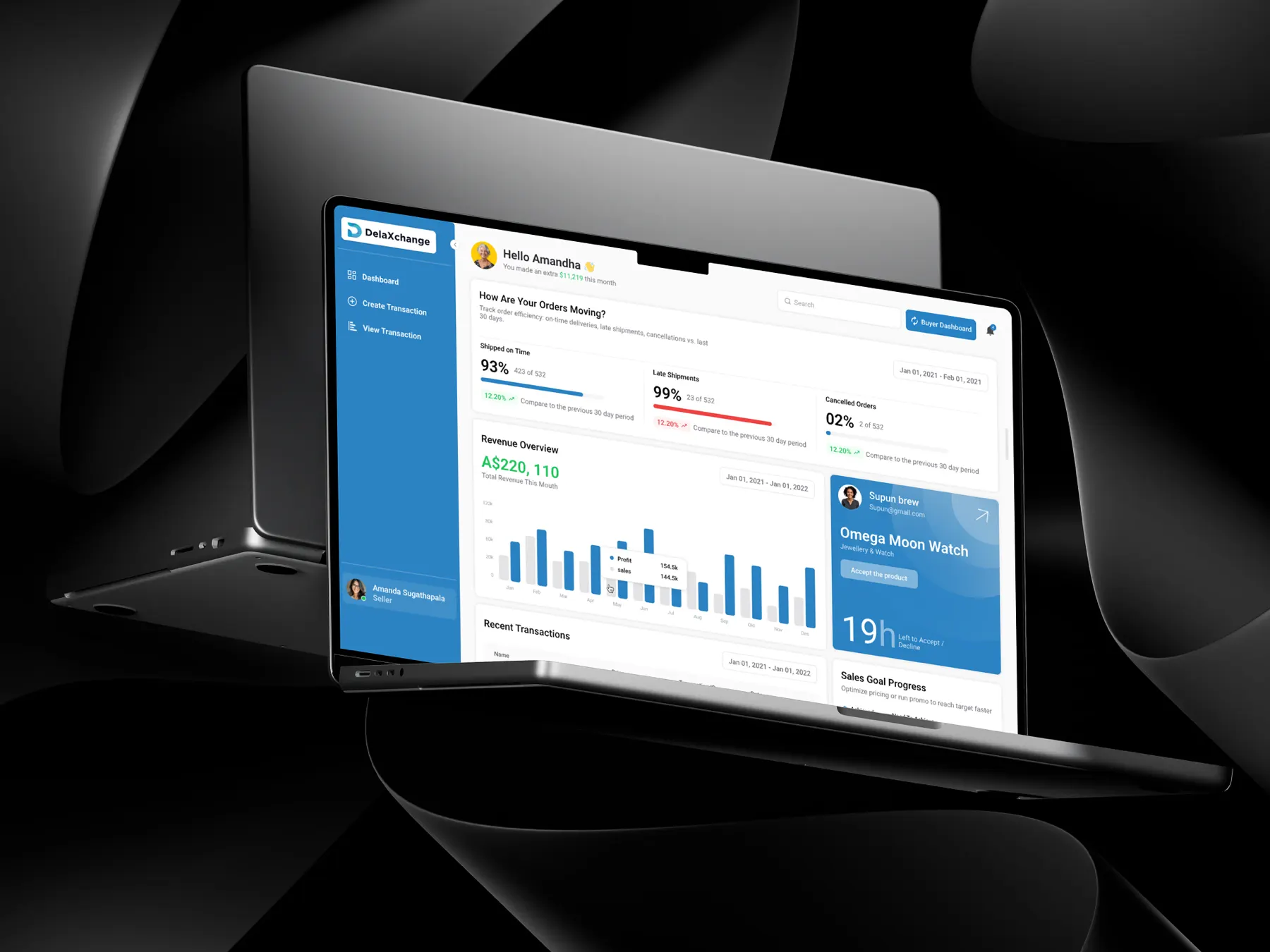
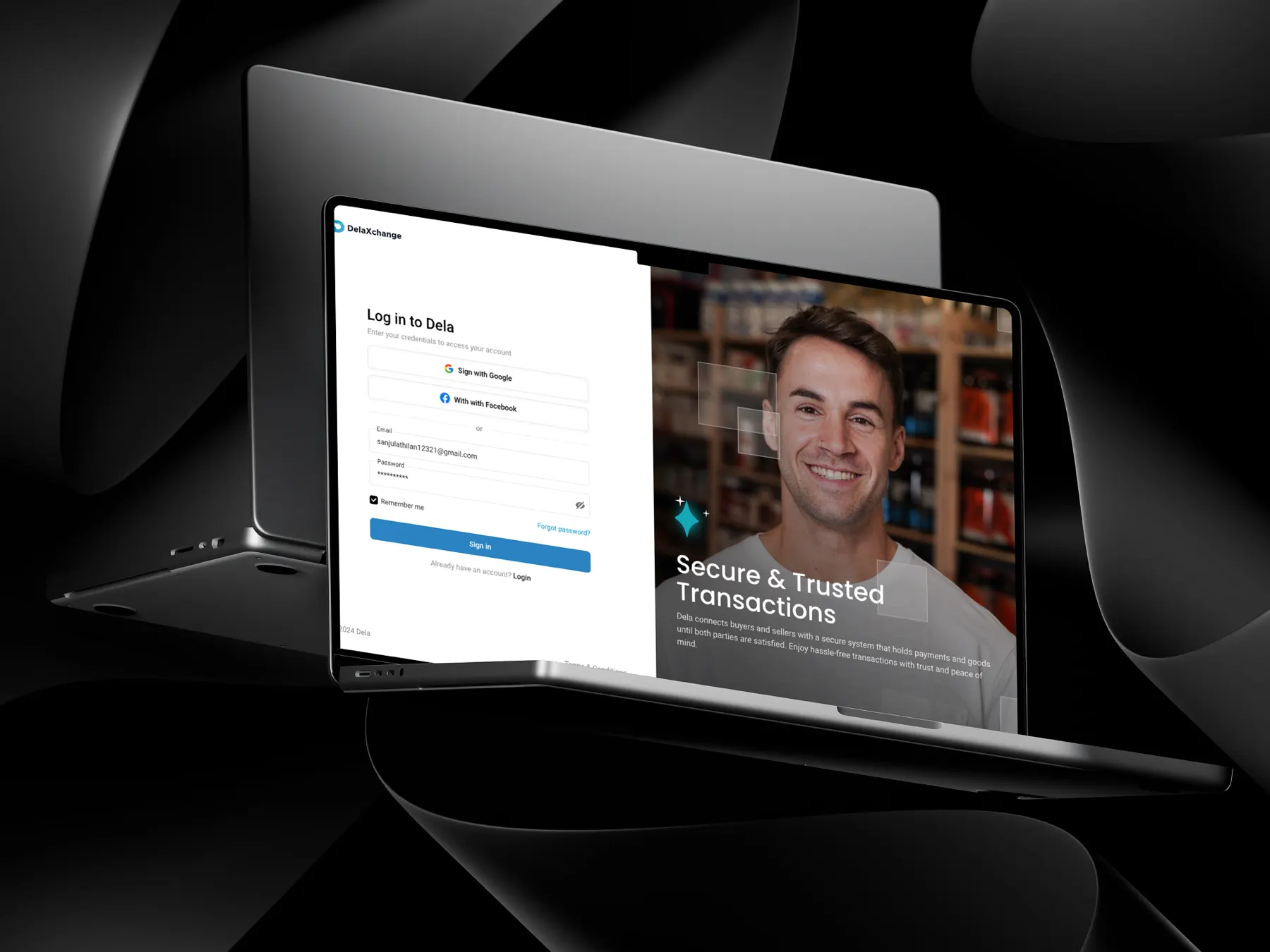
A clearer, safer way to close a deal.
The final design gave the DelaExchange development team a complete, developer-ready flow for both sides of the marketplace.
Figures describe the scope of the design work. Measured results will be added as they become available.
Sanjula Thilan was a valuable member of my Dela dev team. He delivered quality work, was pro-active in problem solving, open to feedback and easy to work with.
Co-Founder, Dela Australia
Trust is built through visible states, not promises. I now start transaction products by mapping what each person is afraid of at every step.